
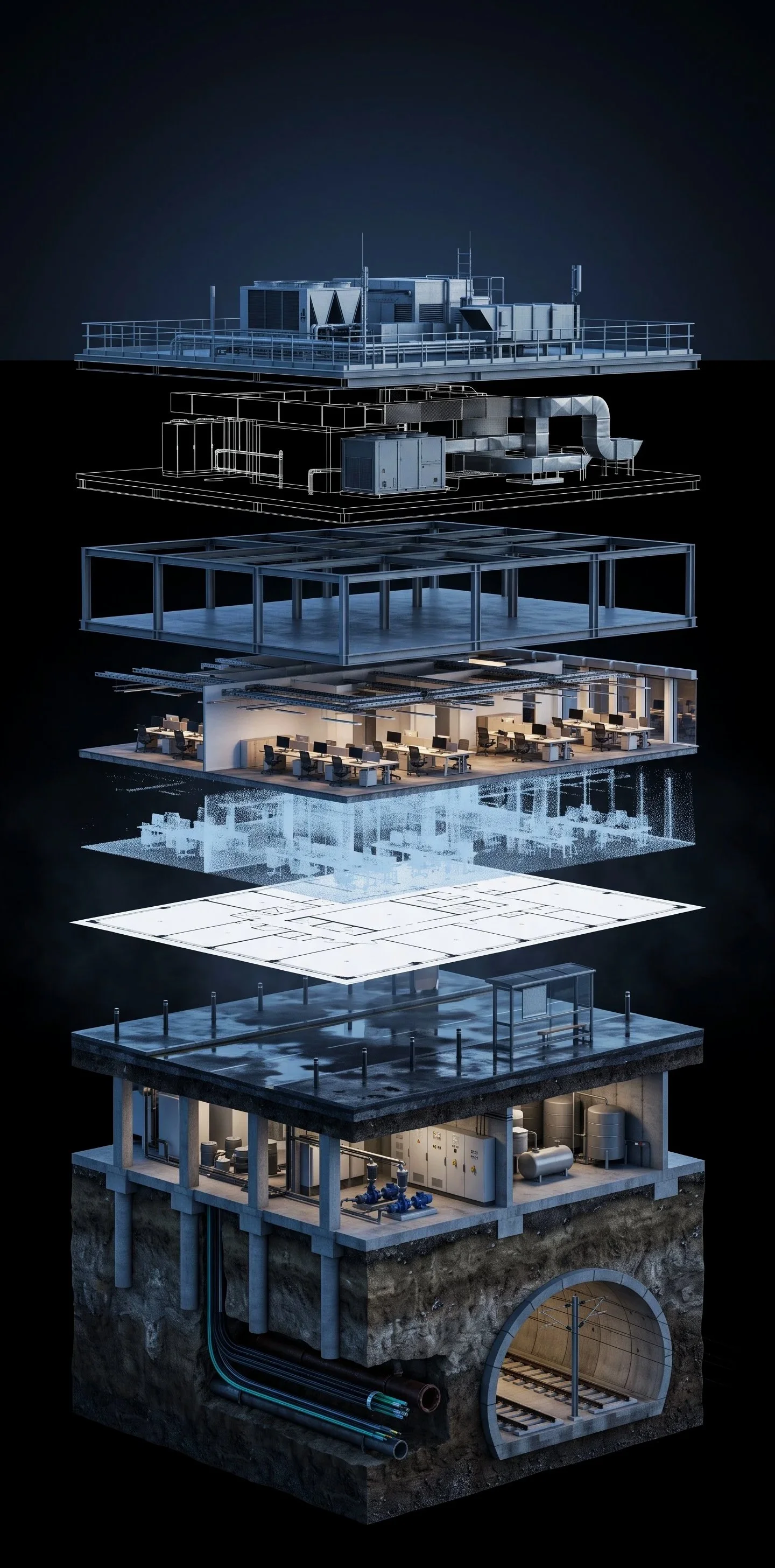
The data exists. The picture doesn’t.
Richard Armstrong helps the world’s organisations turn the physical world into something AI can finally see
Richard Armstrong is a keynote speaker and enterprise architect working at the intersection of artificial intelligence and the physical world. For four decades, he has built the systems that let AI, spatial computing and digital twins model real places, assets and infrastructure — from a €15bn cross-border railway and the £15bn restoration of the Palace of Westminster to a sovereign digital twin of the City of London. His thesis: AI is only as good as its model of reality — and most organisations still cannot see the physical world they own as a single, trustworthy picture.
For over 4 decades, he has worked at the boundary between enterprise technology and the physical world: electronics engineering, global infrastructure, IT and OT convergence, LiDAR, extended reality, and now digital twins at city scale.
The pattern is always the same. Organisations hold enormous amounts of data about physical things they own and cannot see any of it as a single picture.
That is the problem worth solving.
He has worked hands-on with Spatial Computing hardware and enterprise applications since 2016, and brings working headsets - including Apple’s Vision Pro - to engagements where a live demonstration adds value.
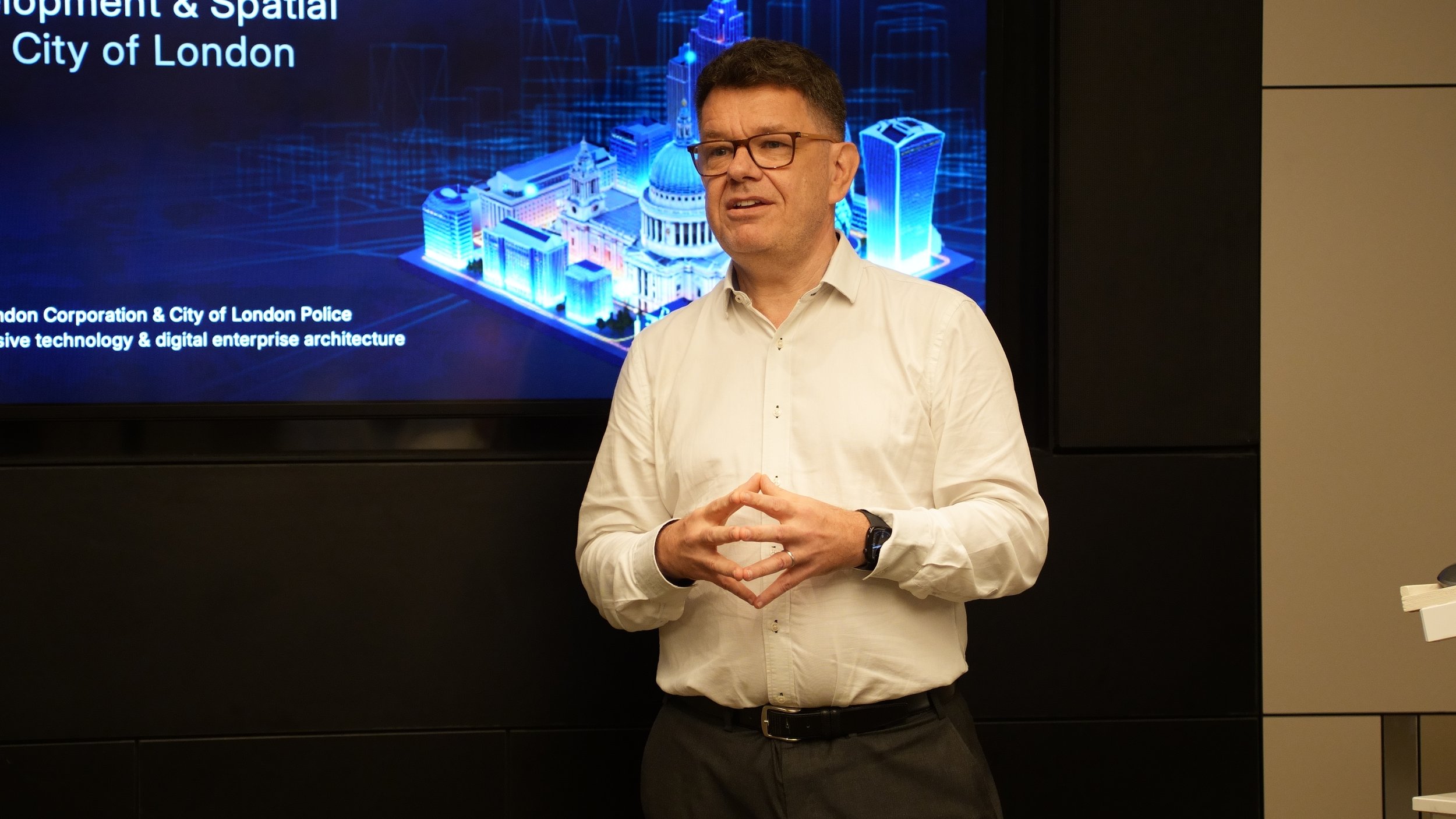
Delivering a Keynote at the Digital Twin Tech Summit 2026 in Amsterdam, building a sovereign digital twin for the Square Mile.
Cities & Critical National Infrastructure
Sovereign digital twins, spatial data infrastructure, and IT/OT convergence on programmes measured in billions. The City of London. The Palace of Westminster. A €15BN cross-border railway.
Justice & Public Safety
Capturing physical scenes as data and presenting them as evidence. 3D LiDAR scanning of crime scenes and immersive evidence in the courtroom, introduced across HM Courts & Tribunals Service, policing and prosecution.
Industry, Retail & Health
Learning medicine through spatial computing and XR.
The integration of IT & OT across an international rail network.
Using VR in the automotive retail showroom, maximising ROI and net profit.